

Introducing yourself to first-time visitors. ______
Skin that brightens your expression can only be produced if you are happy in mind and body.
To avoid worsening skin irritation, we recommend that people with sensitive skin especially check this.
I I suffered from atopic dermatitis caused by cosmetics , and I was suffering mentally and physically every day.
After that, I worked in product development at a major cosmetics company, and learned why my skin had become rough.
I also learned about the petroleum system in cosmetics. I'm confused... I'm confused when I see the surprising irritating and ineffective ingredients in organic and additive-free cosmetics...
Skincare is also high quality and environmentally friendly. Utilizing the ancient wisdom of coexisting with nature, we will create FRMA that also incorporates modern wisdom! From Ancient Times to now, the first product is cosmetics.
For a brighter look and a brighter life. FRMA cosmetics are a tool to help you live a happy life . This blog will explore hints for living each day in a happy mood .
Sharing is Caring, Caring is Touch, Touch is Love
______________________________________ ______________________________________
I tried making miso! _____
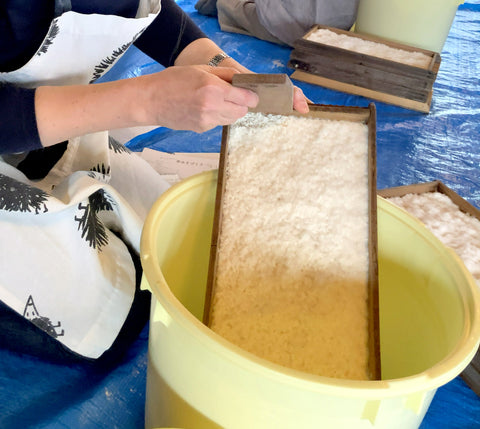
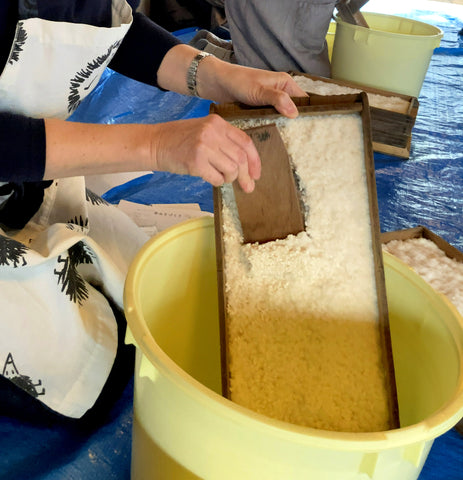
Have you ever made miso?
It was easier than I thought.
I think that natural yeast miso is especially essential for healthy intestinal health for Japanese people.
We recommend brewing it in the winter! Enjoy aging it for 6 months to 1 year to 3 years, depending on your preference. This is where the word "temae miso" comes from, and temae miso is delicious.
Material: Approx. 4.5kg With whatever you like
|
1kg of soybeans |
|
500g salt |
|
1kg of koji (2kg if you want it sweeter) |
Since I had the chance, I used soybeans grown naturally in Hokkaido without any pesticides. They have an amazing sweetness! I used koji from Kojiya Saburoemon. https://www.kouji-ya.com/
Kojiya Saburoemon Excerpt ______ https://www.kouji-ya.com/about_us/
Nice to meet you. I run a shop called "Kojiya Saburouemon" in Nakamura, Nerima Ward, Tokyo, where I make and sell koji and miso.
The name Saburoemon is the family name used when my family served as village headman in what is now Kami Kimiyama, Edosaki-cho, Inashiki-gun, Ibaraki Prefecture during the Edo period.
I have heard that they began selling miso and koji there in the mid-Meiji period. At the beginning of the Taisho period, a fire broke out in the koji room and everything from the miso storehouse to the main house burned down, but the storehouse, built in 1839, remains to this day as a family treasure.
My grandfather came to Tokyo after the earthquake in 1923. He initially set up a store near Ueno Station, but it became too small, so in 1939 he built a miso factory in what is now Nakamura, Nerima Ward, and later moved the store there.
However, my uncle, who was the main breadwinner, went off to war and was killed in action, so I was called from my hometown in 1945, in the midst of the Tokyo air raids, to take over the business. I was fortunate enough to be able to study at the Ministry of Finance Brewing Research Institute in Oji, Tokyo, where my uncle, who was killed in the war, worked, and since then, I have been dedicated to making koji and miso for over 50 years.
The sixth generation Kiyoshi Tsujita
Making miso after the war faced difficulties that are hard to imagine today, including the lack of raw materials. I clearly remember that when I first brought the miso I had made to my wife's father after getting married, he scolded me, saying, "How can you eat such disgusting miso?" Since then, I have started to try the homemade miso of rural families, and have adopted the miso made by the families that I found to be the most delicious, and have continued to improve it.
Thanks to my efforts, the miso I have made has been highly praised by many people. Not only has it been featured on television, in newspapers, and in magazines, but my homemade miso has also been featured in detail in the American book "BOOK OF MISO."
When we think about people's health, we cannot separate it from "food." I have been committed to additive-free, naturally brewed miso since before the current boom in natural and health foods. This is because miso made with quality ingredients and carefully prepared is undoubtedly delicious, and is also safe and healthy. It may cost money and take time, but I believe that health is priceless.
______ ______ ______ ______
If it's a great piece of writing, we'll post it as is! Kojiya Saburoemon, please let us know if you have any questions.
How to make: Prepare a container to store it in
| Boil the soybeans (until they can be crushed with your fingers) |
↓
| Use a food processor or crush with your hands until it forms a paste. |
↓
| Mix the koji and salt evenly. |
↓
| Once the soybean paste has cooled to body temperature, Mix everything evenly. |
↓
| Once thoroughly mixed, press it into a ball like a hamburger. Throw it into a storage container! Be sure to throw it in so that no air gets in. Gaps can cause mold, so finish by filling any gaps with a fist punch. |
↓
| Store in a cool, dark, well-ventilated place |
Maybe it was because it was so hot in my apartment, but the coffee in my friend's was a lighter brown.
Mine didn't get moldy. One way to prevent mold from growing is to put cheap wasabi in a tube around the container so that it doesn't get on the miso.
FRMA develops products that address such topics as what foods are good for rough skin, sudden rough skin, how to quickly cure rough skin, skin care for rough skin, severe rough skin, especially on the face, what kind of skin do you have?, seasonal rough skin, rough skin in spring, how to quickly cure rough skin, rough skin in people in their 40s and 50s, and the causes of rough skin.


